What the examiner sees
Photograph description
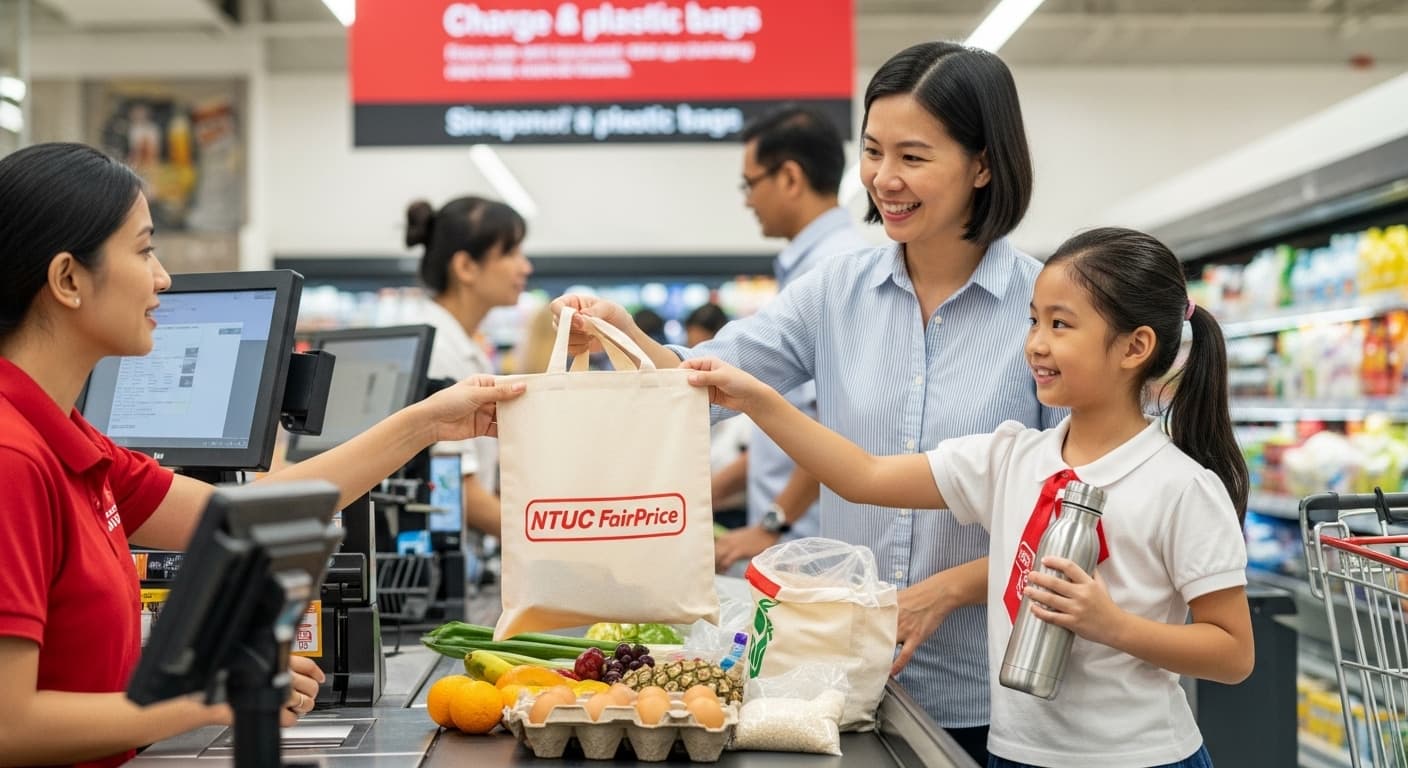
The photograph shows a mother and her primary-school-aged daughter at a NTUC FairPrice supermarket checkout. The mother is handing her own reusable cloth bag to the cashier, while the daughter holds a stainless-steel water bottle. On the belt are groceries without any plastic packaging — loose fruit, eggs in a cardboard tray, and rice in a canvas bag. A sign above reads that plastic bags cost 5 cents each.
Three questions the examiner might ask
What is happening in this photograph? What choices has this family made?
Do you and your family try to use less plastic? Tell me about something you do.
Some people say that one family using fewer plastic bags makes no real difference. What do you think, and why?
Q1 tests what you see in the photograph. Q2 tests a personal experience. Q3 tests your opinion — the hardest of the three since 2025.
A model opinion answer (P.E.E.L.)
Point
I disagree with the idea that one person cannot make a difference to the environment.
Explain
Small individual habits add up across a neighbourhood, and they also influence other people to join in.
Example
At my block, my mother started bringing her own bag to the wet market. Within six months, three of our neighbours had copied her, and now the whole floor does it.
Link
So one person's action didn't just reduce plastic — it created a small ripple effect that is still going today.
Swap in your own example — the structure stays the same. Examiners reward concrete detail over polished phrasing.
Common mistakes on this topic
- Listing environmental problems in a panic without choosing one. Pick the most personal example and go deep on it.
- Saying 'we should recycle' without describing what your family actually does. Vague answers score low on content.
- Conceding immediately when the examiner pushes back. Defend your view politely — 'I see your point, but…' — instead of flipping.
Vocabulary that works for this topic
sustainable— able to continue without harming the environment
“We need a sustainable way to dispose of plastic.”
pollution— harmful substances in the environment
“Air pollution affects children's health.”
conserve— to protect and use carefully
“We should conserve water during dry months.”
reduce, reuse, recycle— the three Rs for waste
“Reduce, reuse, recycle is a daily habit at home.”
environment— the natural world around us
“Protecting the environment is everyone's job.”
disposable— meant to be used once and thrown away
“Disposable cutlery creates a lot of waste.”
For parents
Walk around the estate together and ask your child to spot three examples of waste or recycling. Then ask which one is the most pressing and why. That's exactly the Q3 opinion muscle the exam rewards.
Practise this topic now
Run a full Stimulus-Based Conversation on “Reducing Plastic” with an AI examiner.
Three real opinion questions, instant scoring on the 2025 SEAB rubric, and a parent-friendly breakdown of what to improve. Free for your first 10 sessions.
Practise this topic freeSign in takes 10 seconds · No credit card
More topics in Environment & Sustainability
Protecting Our Environment
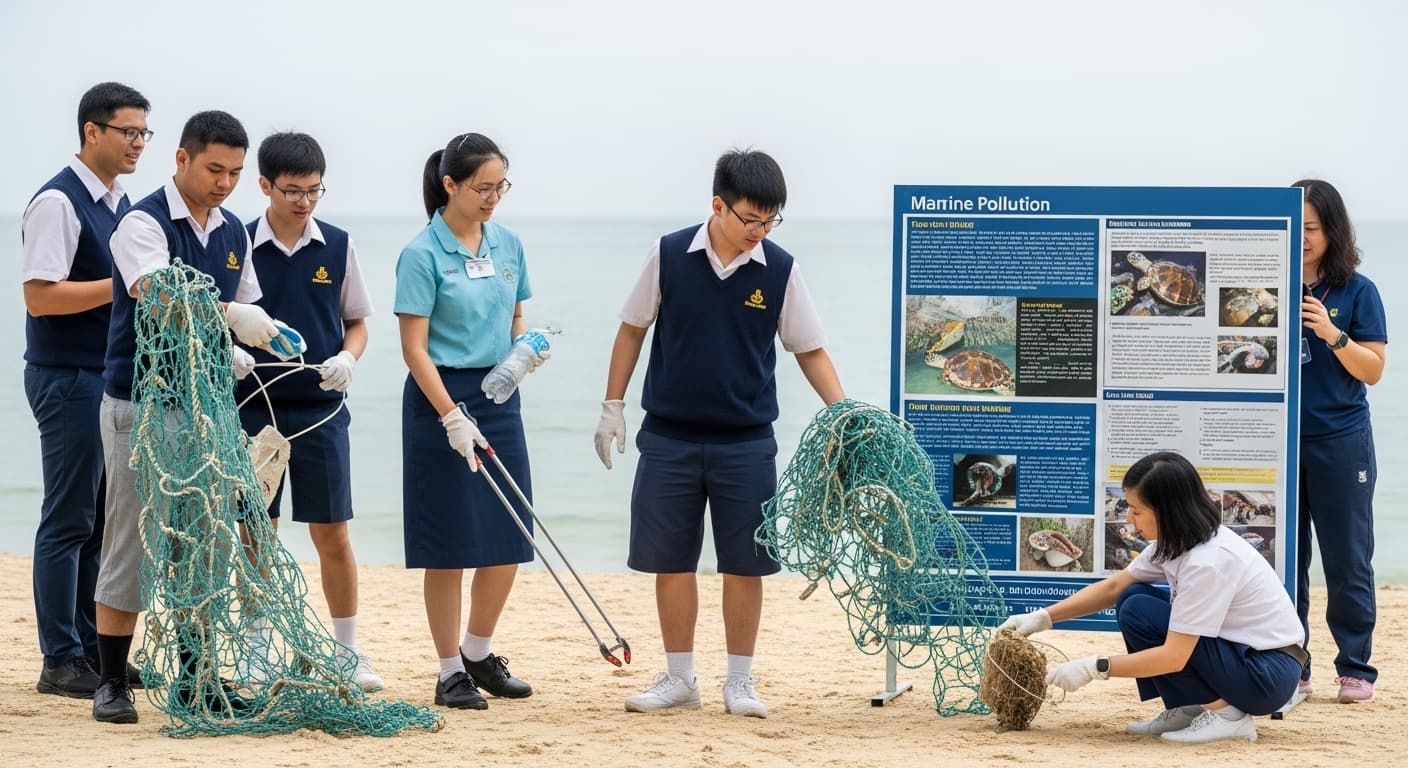
Environment Q3 often asks if one person makes a difference. Disagree politely, name the ripple effect in your own block or school, and refuse to flip when the examiner pushes.
Recycling at Home
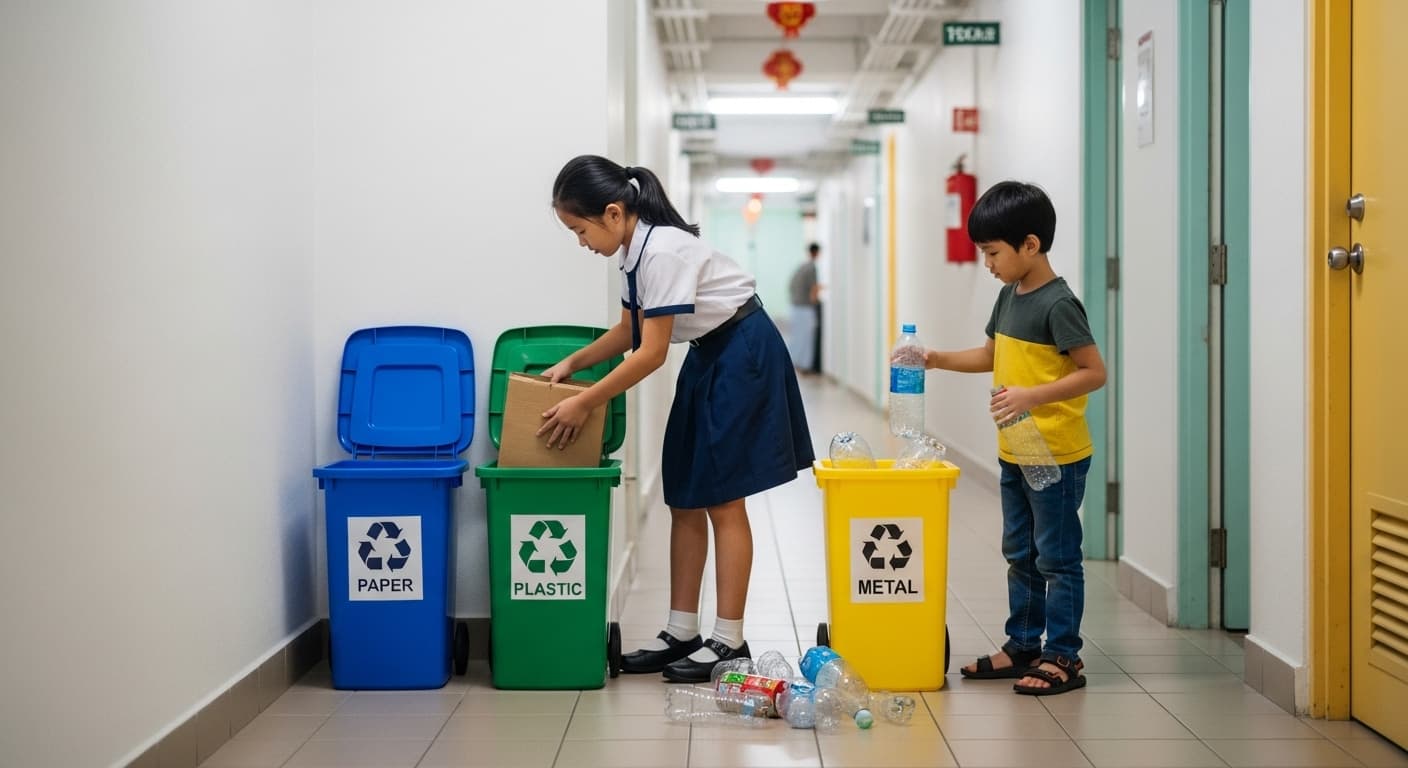
Recycling Q3s often test whether students know which materials go where. A confident sort plus a real home routine beats a generic 'recycling is good'.
Saving Water
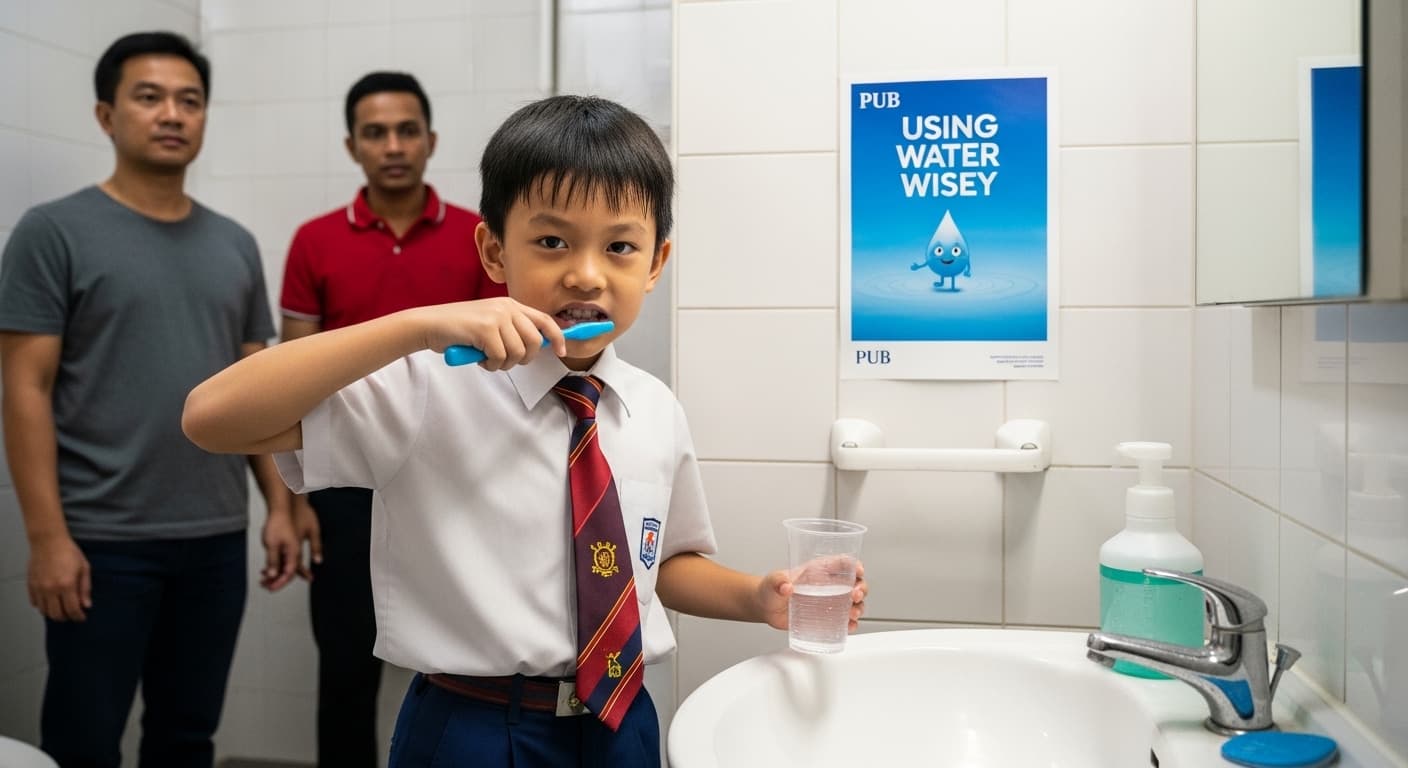
Water-saving SBCs reward local specifics. Bringing in the PUB reservoir context — or a household rule like reusing rinse water — lifts the answer above a textbook reply.