What the examiner sees
Photograph description
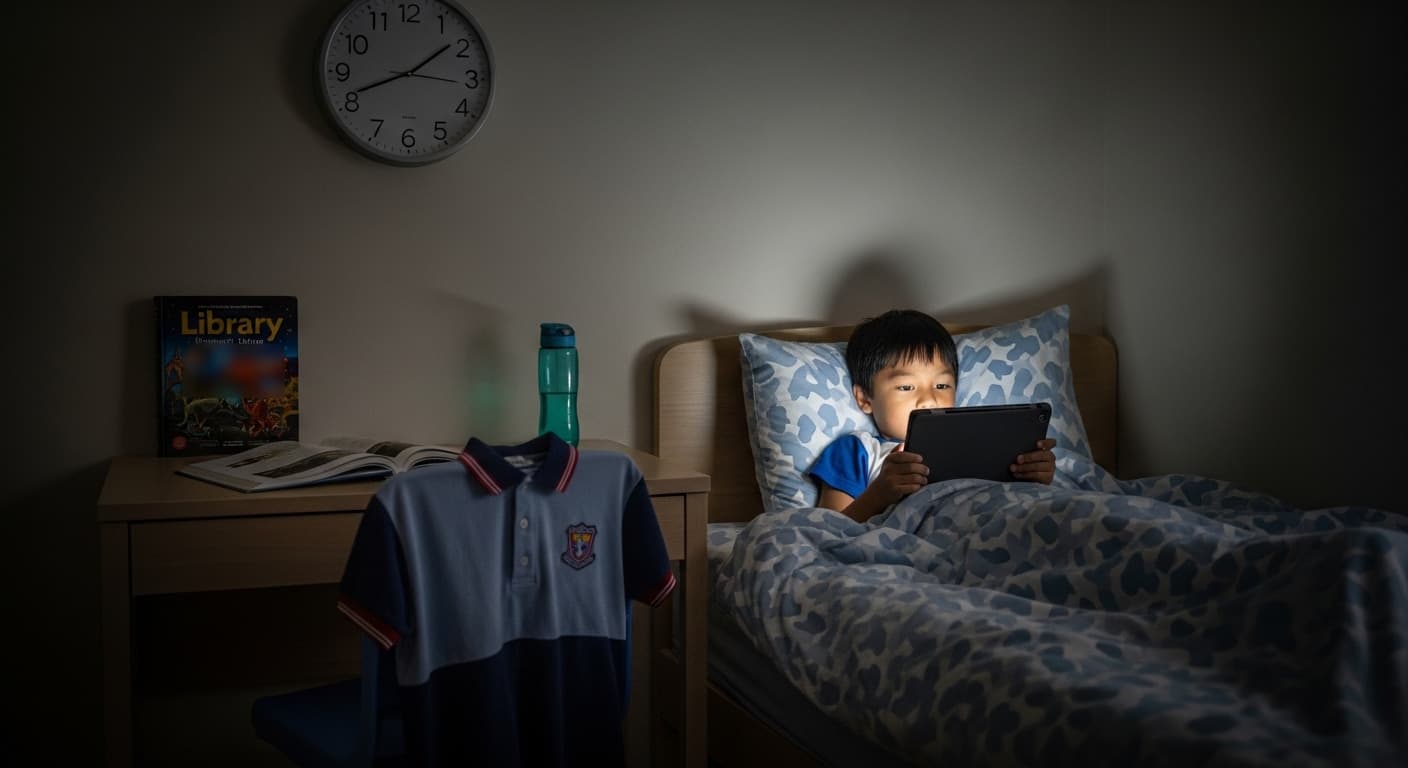
The photograph shows a primary school child's bedroom at night. A boy is lying in bed with the lights off, but the bright screen of a tablet shines on his face as he watches something under the blanket. A round wall clock clearly reads 11:20 pm. On his desk, an unopened library book sits next to a water bottle. His school uniform for the next day is laid out on a chair.
Three questions the examiner might ask
What is happening in this photograph? Why do you think this is not a good idea?
What time do you usually go to sleep on school nights? Tell me about your bedtime routine.
Some students sleep less than eight hours a night. What advice would you give them, and why?
Q1 tests what you see in the photograph. Q2 tests a personal experience. Q3 tests your opinion — the hardest of the three since 2025.
A model opinion answer (P.E.E.L.)
Point
I partly agree that schools should sell only healthy food.
Explain
Healthy options make the right choice easier for tired 12-year-olds, but banning unhealthy food completely can backfire.
Example
At my school, the canteen introduced brown rice sets last term. I ordered them on most days, but I still had a fried noodle treat once a week. That small balance made me stick with the healthy choice most of the time.
Link
So healthy food should be the default, but a small amount of variety helps students build long-term habits rather than just obeying a rule.
Swap in your own example — the structure stays the same. Examiners reward concrete detail over polished phrasing.
Common mistakes on this topic
- Saying you only eat healthy food. Examiners know students enjoy chicken rice and bubble tea — be honest and talk about moderation.
- Treating the opinion question as a slogan. 'Schools must be healthy!' is not an answer; explain why, then acknowledge the trade-off.
- Skipping the picture. Q1 always needs a clear description of what the student in the photo is doing.
Vocabulary that works for this topic
balanced— with the right mix
“I try to eat a balanced diet.”
nutritious— full of nutrients
“Fruits and vegetables are nutritious.”
moderation— not too much
“Sweets are fine in moderation.”
routine— regular activities
“Sleeping by 10pm is part of my routine.”
well-being— overall health
“Exercise improves my well-being.”
energetic— full of energy
“A good breakfast makes me feel energetic.”
For parents
During lunch, ask your child what a healthier version of their meal would look like — and what they'd give up to get there. That's the exact trade-off reasoning Q3 rewards.
Practise this topic now
Run a full Stimulus-Based Conversation on “Getting Enough Sleep” with an AI examiner.
Three real opinion questions, instant scoring on the 2025 SEAB rubric, and a parent-friendly breakdown of what to improve. Free for your first 10 sessions.
Practise this topic freeSign in takes 10 seconds · No credit card
More topics in Health & Wellness
Healthy Eating
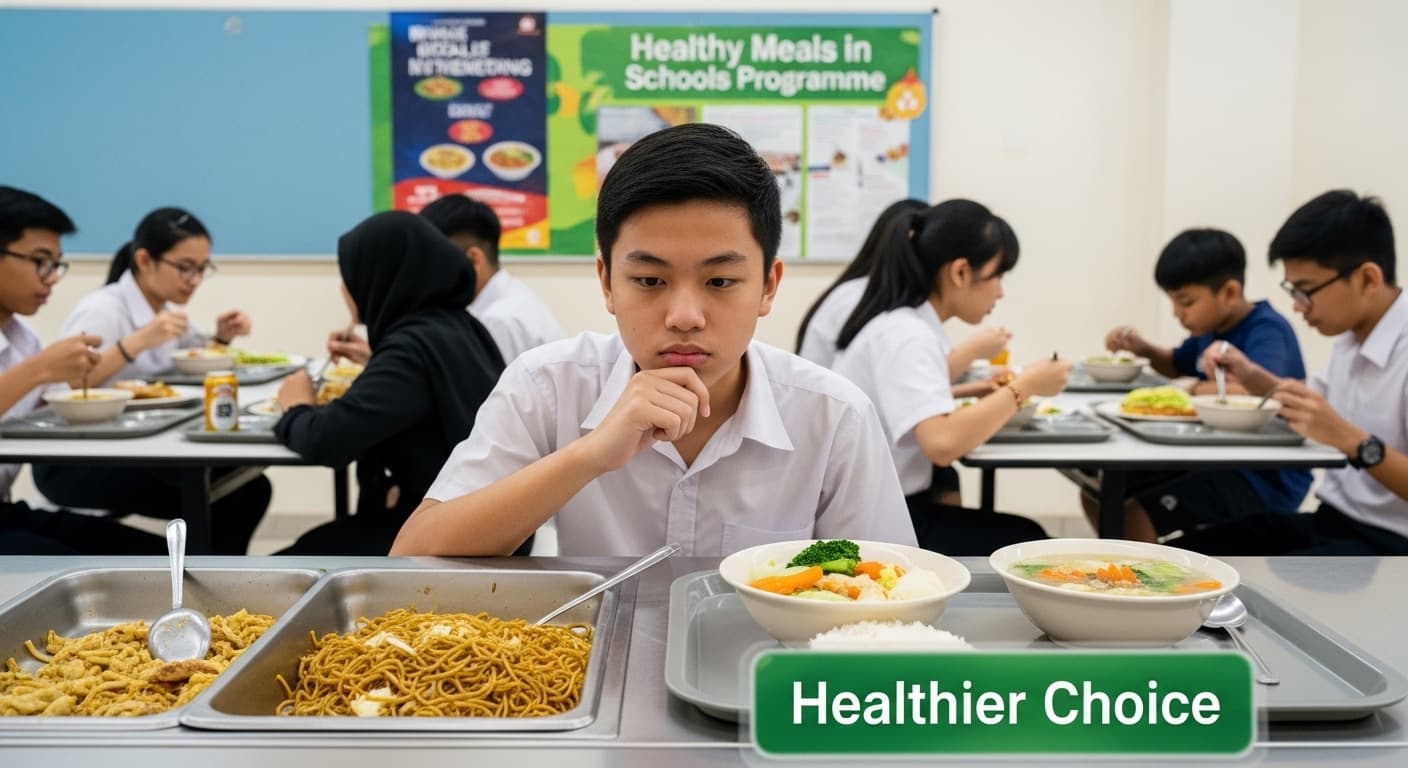
Healthy-eating Q3 rewards honesty over virtue. Students who admit to enjoying bubble tea and hawker fried food — then talk about balance — score higher than students who pretend.
Staying Safe
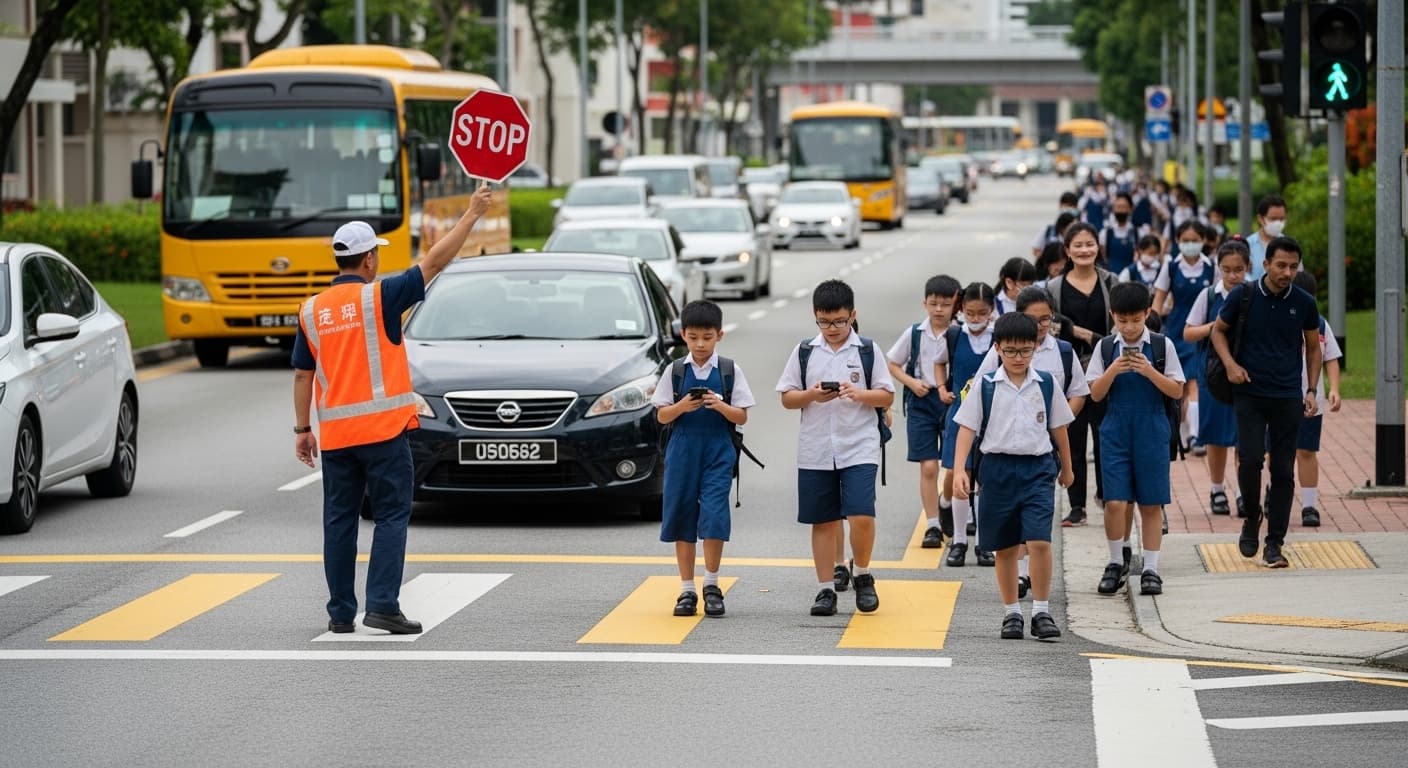
Road-safety SBCs look gentle but test opinion clearly. The Q3 on phone use near roads rewards a plain view plus a real observation from outside your school gate.
Exercise Routine
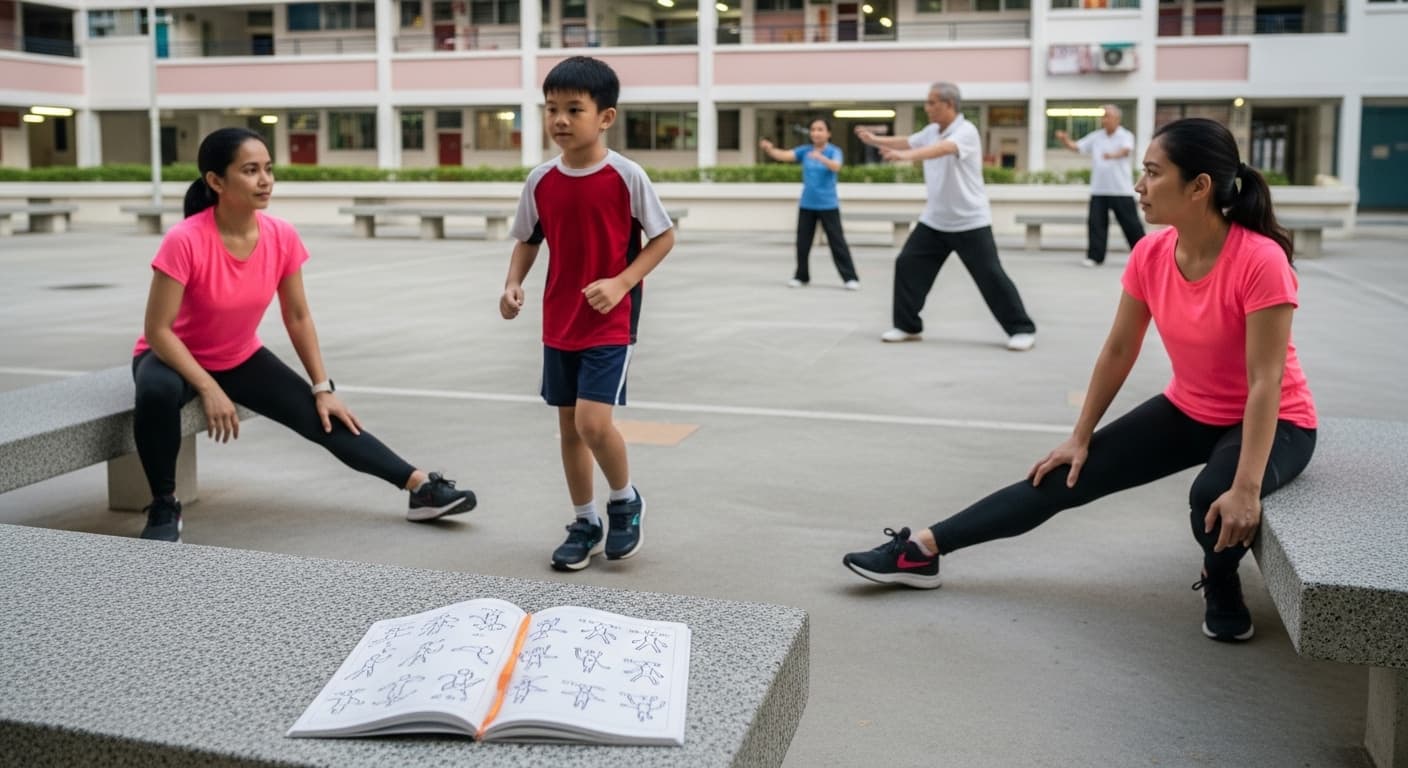
Exercise photographs test inference about setting (the void deck, the morning light). Q3 on 'too busy to exercise' rewards students who defend exercise without dismissing school pressure.